If you are looking for a smartwatch or fitness tracker with a built-in pulse monitor, you have come to the right place. Most smartwatches and fitness trackers have an optical heart rate monitor built-in. In this article, we will be looking at some of the best smartwatches and fitness trackers that have a pulse oxygen monitor(pulse oximeter) sensor built-in as well.
Blood Saturation became a parameter in discovering the Coronavirus in our bodies, the truth is that many smartwatch and fitness tracker manufacturers had incorporated Oximeters(Oxygen sensors/monitors) in their watches and fitness trackers long before this Virus showed up.
Table of Contents
#Overview
Top pick

Samsung Galaxy Watch 8
- Screen Size: 40,44 Millimeters
- GPS: Built-in GPS
Editor’s choice

Google Pixel Watch 3
- GPS: Built-in GPS
- Screen Size: 41,45 Millimeters
Best Value

Amazfit Balance 3
- Screen Size: 46mm
- GPS: Built-in GPS
How accurate are the Oxygen monitors in Smartwatches and fitness trackers? Can I trust them As A Medical Device? Are they FDA-approved? I will discuss these important topics in this post.
The Coronavirus (SARS-CoV-2) attacks the lungs and causes severe pneumonia which makes it difficult for the victim to breathe. According to WHO, a low Oxygen saturation level could be a sign that you possibly have the Covid_19 and you should seek medical assistance.
Apart from the Coronavirus, Oxygen Sensor can also help you find “sleep Apnea” which is a very serious sleep disorder and it can help you with your training progress as well.
Here is a Short video Explanation by Garmin
15 Best Smartwatches & Fitness Trackers with an Oxygen Sensor
In this comprehensive guide, I will share everything you need to know about Blood Oxygen levels. I will also share some of the best Smartwatches and wearables which can help you determine your Blood Oxygen level. Let’s get into it.
COROS PACE 4
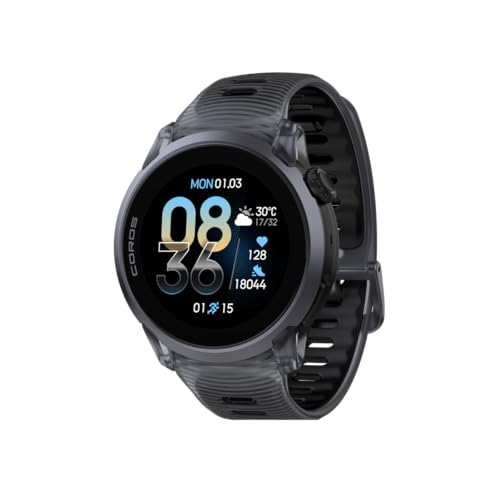
The PACE 4 replaces the discontinued VERTIX 2S in this list and takes the opposite approach: at 32 grams with the nylon band and 11.8mm thick, it is the lightest watch here by a wide margin.
That weight does not cost battery — COROS quotes 41 hours of continuous GPS and up to 19 days of daily use, which beats every mainstream smartwatch in this roundup.
Control is through a digital crown, two buttons and a touchscreen, and a voice recording tool lets you log how a session felt without stopping to type.
How SpO2 Monitoring Works in COROS PACE 4
COROS fits the PACE 4 with a pulse oximeter that measures oxygen saturation optically. It can be triggered manually from the toolbox menu, and when Altitude Mode is enabled the watch takes periodic automatic readings above 2,500 metres to track acclimation as you climb.
Best For: Runners and hikers who want the lightest possible watch on the wrist with altitude-aware oxygen tracking and long battery life.
Pros:
- Lightest watch in this roundup at 32 g
- 41 hours of continuous GPS and up to 19 days of daily battery
- Automatic SpO2 readings above 2,500 m for altitude acclimation
Cons:
- 1.2-inch display is the smallest here
- COROS app ecosystem is smaller than Garmin’s or Samsung’s
- Fewer everyday smartwatch features such as payments
Garmin Fenix 8 Amoled

Serious athletes and outdoor enthusiasts will appreciate the Garmin Fenix 8 AMOLED Sapphire’s extensive health monitoring capabilities paired with rugged durability. This premium 51mm GPS smartwatch features a scratch-resistant sapphire display and titanium bezel that can withstand harsh adventures.
You’ll get thorough performance metrics for training, recovery, and stamina building while enjoying the convenience of a built-in LED flashlight, speaker, and microphone. With 40-meter water resistance and TopoActive maps, it shifts effortlessly from mountain biking to swimming.
The impressive 16-day battery life guarantees you’re never left powerless during extended expeditions, making it worth the investment for dedicated fitness enthusiasts.
How SpO2 Monitoring Works in Garmin Fenix 8
Utilizes Pulse Ox technology with red and infrared LEDs to measure light absorption through blood vessels. Uniquely adjusts readings based on altitude for hikers and climbers. Offers spot-check measurements, all-day tracking, or sleep-only monitoring with adjustable frequency to balance accuracy with battery life.
Best For: Serious athletes, outdoor adventurers, and fitness enthusiasts who need comprehensive performance tracking, rugged durability, and extended battery life for multi-day expeditions.
Pros:
- Premium materials including scratch-resistant sapphire display and durable titanium bezel ensure longevity in harsh conditions
- Comprehensive tracking features with advanced metrics for training, recovery, and multiple sports activities
- Exceptional 16-day battery life eliminates charging concerns during extended outdoor adventures
Cons:
- Premium price point may be prohibitive for casual fitness enthusiasts
- Complex feature set may have a steeper learning curve for first-time Garmin users
Amazfit Active 2
The Active 2 replaces the TicWatch Pro 5, which is no longer reliably stocked, and comes in as the budget entry in this roundup while still carrying a full optical sensor array.
Amazfit fits it with the BioTracker 6.0 PPG biosensor — a dual-LED, five-photodiode build that gathers more signal than the sensors typically found at this price.
It runs the same Zepp app as the Balance 3 with no subscription, and the 1.32-inch AMOLED is protected by sapphire glass rather than the coated mineral glass usual in this bracket.
How SpO2 Monitoring Works in Amazfit Active 2
The BioTracker 6.0 sensor uses red LEDs and photodiodes to measure oxygen saturation, and can run 24-hour continuous monitoring once enabled in the Zepp app. A combined reading of SpO2, heart rate, stress and breathing rate takes about 45 seconds. Independent testing puts it within roughly two percent of clinical oximetry at rest, with accuracy degrading during exercise and in cold conditions — a limitation shared by every optical sensor in this list.
The sensor array contains red and infrared LEDs that shine light onto your wrist. As blood flows through your vessels, it absorbs different amounts of light depending on how saturated it is with oxygen. Oxygenated blood absorbs more infrared light and lets more red light pass through, while deoxygenated blood absorbs more red light and lets more infrared light pass through.
The watch’s photodiodes detect the reflected light, and the onboard processor uses proprietary algorithms to analyze the ratio of red to infrared light absorption, converting this into an SpO2 percentage value.
Best For: Anyone who wants continuous oxygen monitoring and a sapphire screen at the lowest price in this roundup.
Pros:
- Continuous 24-hour SpO2 monitoring with no subscription
- Sapphire glass at a price where mineral glass is the norm
- Combined health reading in about 45 seconds
Cons:
- Accuracy drops during exercise and in cold weather
- Smart features are limited compared with Wear OS watches
- Smallest display among the round watches here
Amazfit Balance 3
The Balance 3 is the current generation of Amazfit’s flagship line and the longest-running watch in this roundup, rated at up to 21 days on a charge — an order of magnitude beyond the Samsung and Google options here.
It carries dual-band GPS across six satellite systems with offline maps and turn-by-turn navigation stored on the watch, which matters if you train where phone signal is unreliable.
Health data lives in the free Zepp app with no subscription, and HybridCharge translates recovery and strain into a simple read on whether to push or rest.
How SpO2 Monitoring Works in Amazfit Balance 3
Amazfit’s BioTracker sensor measures blood oxygen optically and reports it alongside heart rate and HRV in continuous monitoring. Readings can be taken manually in seconds or logged automatically through the day and overnight, with results and trends stored in the Zepp app at no extra cost.
Best For: Anyone who wants multi-week battery and offline navigation without paying a subscription to see their own health data.
Pros:
- Up to 21 days of battery, far beyond anything else in this list
- Dual-band GPS with offline maps stored on the watch
- All health metrics available in the Zepp app with no subscription
Cons:
- Zepp’s ecosystem is less mature than Garmin Connect or Samsung Health
- Smart features and notifications are basic next to Wear OS watches
- Released mid-2026, so long-term reliability reports are still thin
Samsung Galaxy Watch 8
Samsung’s Galaxy Watch 8 replaces the Watch 7 with a thinner, lighter case and a redesigned interface, while keeping the BioActive sensor stack that handles heart rate, ECG and blood oxygen from a single optical module.
The headline additions are Advanced Sleep Coaching, which builds a nightly picture from your sleep stages and recovery, and a Running Coach that reads your performance during a session and adjusts guidance in real time.
It pairs with Android and iOS, charges wirelessly, and at 40mm sits comfortably on smaller wrists — the trade-off being a shorter run between charges than the larger Ultra models.
How SpO2 Monitoring Works in Samsung Galaxy Watch 8
The BioActive Sensor uses red and infrared LEDs to measure how much light your blood absorbs at each wavelength, which is the standard optical method for estimating oxygen saturation. Galaxy Watch 8 samples SpO2 continuously through the night as part of sleep tracking and also takes on-demand readings, with the history charted in Samsung Health.
Best For: Android users who want continuous overnight oxygen tracking bundled with sleep coaching and ECG in a slim everyday watch.
Pros:
- Continuous overnight SpO2 alongside sleep-stage and apnea monitoring
- Noticeably thinner and lighter than the Watch 7 it replaces
- Advanced Sleep Coaching and Running Coach add genuine guidance, not just raw numbers
Cons:
- Battery life drops sharply with Always On Display enabled
- Full feature set, including ECG, requires a Samsung phone
- 40mm case will feel small if you prefer a large display
Samsung Galaxy Watch Ultra2

The Galaxy Watch Ultra2 replaces the Huawei GT 5 Pro in this list, which is no longer sold through Amazon in the US, and occupies the same rugged-flagship position.
It is built for outdoor use: trail navigation with path, elevation and pace guidance, IP68 and 10 ATM ratings, and a Mares dive computer app certified to EN13319 that shows real-time ascent and descent indicators.
Vitals tracks five health metrics overnight and rolls them into a single heart health score, and the on-wrist AI assistant responds without reaching for a phone.
How SpO2 Monitoring Works in Samsung Galaxy Watch Ultra2
The BioActive sensor measures blood oxygen with red and infrared light in the same way as the Galaxy Watch 8, but here it feeds into the Vitals panel alongside four other overnight metrics. That framing is useful for altitude and diving, where oxygen saturation is a safety-relevant number rather than a curiosity.
Best For: Divers, hikers and trail runners on Android who need a watch rated for water and altitude with overnight oxygen tracking built in.
Pros:
- EN13319-certified dive computer with real-time ascent indicators
- IP68 and 10 ATM with a 47mm titanium case
- Vitals combines five overnight metrics into one heart health score
Cons:
- Largest and heaviest watch in this roundup
- Full functionality assumes a Samsung phone
- Released August 2026, so long-term durability reports are limited
POLAR Vantage V3

Designed for serious athletes who demand thorough training metrics and extended battery life, the POLAR Vantage V3 stands out with its impressive oxygen monitoring capabilities.
The vibrant AMOLED touchscreen offers customizable dashboards while dual-frequency GPS with downloadable maps guarantees you’ll never lose your way on remote trails. With over 150 sport modes and up to 140 hours of training time, this powerhouse watch handles any adventure you throw at it.
Despite some users reporting inconsistent heart rate readings and occasional charging issues, the comfortable design and seamless app integration make the Vantage V3 a compelling choice for data-driven athletes monitoring their oxygen levels during intense workouts.
How SpO2 Monitoring Works in Polar Vantage V3
Advanced optical sensor optimized for athletes with special algorithms that account for circulation changes during intense exercise. Provides spot-check measurements plus automatic overnight tracking, with analysis focused on recovery optimization and altitude acclimatization for training purposes.
Best For: Serious athletes and endurance enthusiasts who need comprehensive training metrics, extended battery life, and navigation capabilities for remote outdoor activities.
Pros:
- Impressive battery life lasting up to 140 hours in training mode and 8 days with regular use
- Dual-frequency GPS with downloadable offline maps for reliable navigation on remote trails
- Versatile training companion with over 150 sport modes and customizable AMOLED touchscreen display
Cons:
- Some users report inconsistent heart rate readings during intense activities
- Charging issues with the original cord and variable recharge times (5-10 hours)
- Limited app functionality, particularly when editing maps and setting custom training goals
Google Pixel Watch 3

Boasting the impressive 45mm Actua display that’s twice as bright and 40% larger than previous models, Google’s Pixel Watch 3 stands out as a premium choice for Android users seeking extensive health tracking.
The sleek matte black aluminum case with obsidian band houses powerful fitness features including Fitbit’s advanced running metrics, custom workouts, and real-time guidance. You’ll appreciate the thorough health insights like readiness tracking and cardio load measurement to optimize your training.
With seamless Google Assistant integration and compatibility with Pixel phones (Android 10.0+), you’ll enjoy convenient notifications and app access. The 24-hour battery life requires daily charging, but users report efficient recharging with the included USB-C fast charging cable.
How SpO2 Monitoring Works in Google Pixel 3 Watch
Leverages Fitbit’s technology with an improved sensor array of red and infrared LEDs. Measures SpO2 primarily during sleep, presenting data as both percentage values and variation graphs. Algorithm designed to minimize false readings from movement or environmental factors.
Best For: Android users who prioritize sophisticated fitness tracking and want a smartwatch with an excellent display, seamless Google ecosystem integration, and advanced health monitoring capabilities.
Pros:
- Impressive 45mm Actua display that’s twice as bright and 40% larger than previous models delivers exceptional visibility and user experience
- Comprehensive fitness features including Fitbit integration, advanced running metrics, readiness tracking, and cardio load measurement
- Seamless integration with Google ecosystem including Google Assistant, Pixel phones, Pixel Buds, and Nest devices
Cons:
- 24-hour battery life requires daily charging, which may be inconvenient for some users
- Limited compatibility as it only works with Android 10.0+ devices, excluding iPhone users
- Higher price point compared to some competitor smartwatches with similar features
Garmin Venu 3S
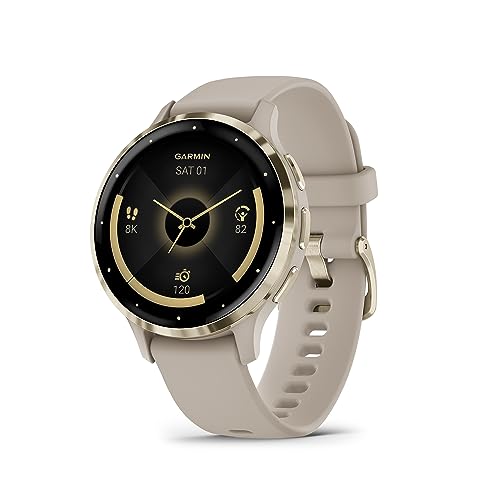
The Venu 3S is the 41mm version of Garmin’s lifestyle smartwatch, aimed at people who want Garmin’s health tracking depth without the bulk of a fēnix.
Body Battery combines sleep, naps, activity and stress into a single energy score, and the sleep coaching gives a nightly score with specific guidance rather than raw stage graphs.
It handles calls from the wrist, includes a wheelchair mode that counts pushes instead of steps, and detects and logs naps automatically.
How SpO2 Monitoring Works in Garmin Venu 3S
Garmin’s Pulse Ox sensor shines red and infrared light into the wrist and reads the reflected signal to estimate oxygen saturation. On the Venu 3S you can take a spot reading, run it continuously during sleep, or enable all-day acclimation tracking — with the caveat Garmin states plainly, that this is not a medical device.
Best For: Smaller wrists that want Garmin’s sleep and recovery analysis with overnight oxygen tracking and roughly a week between charges.
Pros:
- Up to 10 days battery while still running overnight Pulse Ox
- Body Battery and sleep coaching turn raw data into actionable guidance
- Wheelchair mode and nap detection are genuinely uncommon inclusions
Cons:
- Continuous Pulse Ox noticeably shortens battery life
- 41mm display is cramped for maps and detailed data screens
- Garmin explicitly states readings are not for medical use
Withings ScanWatch 2

The Withings ScanWatch 2, with its advanced oxygen sensor, is perfect for health-conscious individuals seeking reliable SpO2 monitoring throughout their daily activities. This smartwatch provides accurate blood oxygen level readings, giving you valuable insights into your overall health and fitness. Its focus on health tracking helps detect potential respiratory issues or changes in oxygen saturation, ensuring you stay informed about your wellbeing.
You can monitor your SpO2 levels during sleep, exercise, and everyday activities, offering a thorough view of your health. The oxygen sensor seamlessly complements the ScanWatch 2’s other health monitoring features, making it an invaluable tool for managing your wellness.
With the Withings ScanWatch 2, you’re equipped to take proactive steps towards better health.
How SpO2 Monitoring Works in Withings ScanWatch 2
Features medical-grade SpO2 monitoring (clinically validated) through a dedicated sensor cluster. Measurement is primarily on-demand through a 30-second test sequence. The watch guides proper positioning for accurate readings and can notify of significant overnight drops in oxygen levels.
Best For: Health-conscious individuals looking for reliable and comprehensive SpO2 monitoring throughout their daily activities.
Pros:
- Accurate blood oxygen level readings for insightful health tracking.
- Ability to monitor SpO2 levels during sleep, exercise, and daily activities.
- Seamlessly integrates with other health monitoring features for comprehensive wellness management.
Cons:
- May require regular charging due to continuous health monitoring.
- Advanced features might be overwhelming for casual users.
- Potentially higher price point compared to basic fitness trackers.
Fitbit Sense 2
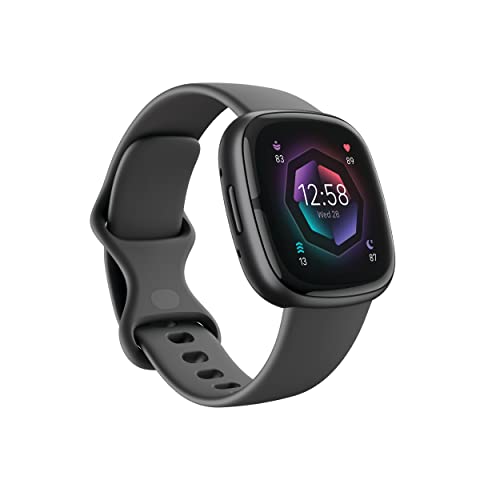
For those wanting to monitor their blood oxygen saturation levels throughout the day, the Fitbit Sense 2 offers a dependable and thorough solution. It’s equipped with an oxygen sensor that measures your blood oxygen saturation levels, giving you insights into your overall health and wellness. You can track changes in your blood oxygen levels throughout the day, helping you understand how your body is functioning and how you might need to adapt your lifestyle.
The Fitbit Sense 2’s oxygen sensor provides a detailed health monitoring experience by offering valuable data on your oxygen saturation levels. This feature helps you stay informed about your body’s needs and make more informed health decisions. It’s an essential tool for anyone serious about maintaining their health.
How SpO2 Monitoring Works in Fitbit Sense 2
Multi-path optical heart rate sensor includes red and infrared LEDs for SpO2 detection. Primarily measures during sleep automatically, displaying your “Estimated Oxygen Variation” with graphs showing fluctuations rather than specific percentages. Data integrates with Fitbit’s sleep scoring system to detect potential breathing disturbances.
Best For: Individuals who want to continuously monitor their blood oxygen saturation levels for better health and wellness insights.
Pros:
- Advanced oxygen sensor for accurate blood oxygen saturation measurement.
- Provides continuous tracking of oxygen levels throughout the day.
- Helps users make informed health decisions based on detailed oxygen saturation data.
Cons:
- May require regular calibration for accurate readings.
- Potentially higher cost compared to models without oxygen sensors.
- Battery life may be impacted by continuous monitoring features.
Polar Grit X2 Pro

Fitness enthusiasts will appreciate the Polar Grit X Pro’s advanced oxygen sensor for tracking blood oxygen levels during intense workouts. This smartwatch comes with a SpO2 sensor that delivers real-time oxygen saturation readings, giving you valuable insights into how well your body is absorbing oxygen.
By monitoring your oxygen levels, you can optimize your performance and recovery during various activities. The Polar Grit X Pro’s oxygen sensor enhances your overall health and fitness tracking, providing you with data that can help improve your training regimen.
You’ll find this feature particularly useful for monitoring your body’s response to strenuous exercises, ensuring you perform at your best while maintaining peak health.
Best For: Outdoor athletes who need a watch that survives rough conditions while still tracking oxygen, recovery and altitude adaptation.
Pros:
- Military-standard durability with sapphire glass and steel bezel
- Dual-frequency navigation for accurate routing in difficult terrain
- Vertical speed and running power measured natively
Cons:
- Stock is limited at the time of writing
- Heavier and thicker than lifestyle watches in this list
- Polar Flow has a steeper learning curve than Garmin Connect
Fitbit Charge 6

The Charge 6 is the only band-style tracker in this roundup rather than a full smartwatch, which makes it the least intrusive option for people who dislike wearing something bulky overnight.
Despite the small case it carries built-in GPS, ECG, heart-rate tracking and stress monitoring, and it connects to Google services including Maps and Wallet.
The narrow display keeps things simple — this is a device for logging your health accurately rather than for reading messages or running apps.
How SpO2 Monitoring Works in Fitbit Charge 6
Charge 6 measures blood oxygen optically during sleep and reports a nightly average along with an estimated oxygen variation graph in the Fitbit app. Readings are taken passively while you wear it overnight rather than on demand, so the value is in the trend across weeks rather than any single number.
Garmin Forerunner 165

The Forerunner 165 is the modern successor to the long-discontinued 245 and brings the biggest visible change to the line: an AMOLED touchscreen in place of the old transflective display.
It keeps the running fundamentals — built-in GPS for pace and distance, wrist heart rate, and daily suggested workouts that adapt to your recent performance and recovery.
The morning report summarises sleep, recovery and training outlook when you wake, and training effect labels explain what each session actually did for your fitness.
How SpO2 Monitoring Works in Garmin Forerunner 165
The Forerunner 165 includes Garmin’s wrist-based Pulse Ox sensor. You can trigger a manual reading from the pulse oximeter glance, or enable continuous measurement during sleep so oxygen saturation is tracked alongside sleep stages and logged in Garmin Connect.
Garmin Forerunner 965

The Forerunner 965 is the direct replacement for the 945 and sits at the top of Garmin’s running range, wrapped in a titanium bezel around a 47mm AMOLED display.
Multi-band GPS with full-colour maps stored on the watch makes it the most capable navigator here short of the fēnix, and battery still stretches to 23 days in smartwatch mode.
Training readiness pulls sleep quality, recovery, training load and HRV into one score that tells you whether today is a day to push or hold back.
How SpO2 Monitoring Works in Garmin Forerunner 965
Pulse Ox on the 965 works the same way as elsewhere in Garmin’s range — red and infrared light measured at the wrist — but the larger sensor housing and longer battery make continuous overnight tracking more practical here than on smaller models. Acclimation tracking is useful if you train at altitude.
Alongside the familiar and beloved features of the GARMIN multisports watches, the Forerunner 945 is equipped with new and essential features that have so far been the exclusive possession of more expensive models, including a powerful battery, GPS reception from 3 satellites including GALILEO for fast and stable spotting, fast-dialing SOS emergency service for a predefined number during distress, measuring Pulse Ox blood oxygenation and, for the first time, direct listening to music with up to 1,000 songs storage and connecting to popular music services, including Spotify and Deezer.
How SpO2 Monitoring Works in Modern Smartwatches
Smartwatches measure blood oxygen saturation (SpO2) using pulse oximetry technology, where red and infrared LED lights are projected through the skin onto blood vessels in the wrist.
The sensors detect how much light is absorbed or reflected back, with oxygenated blood absorbing different wavelengths than deoxygenated blood. The smartwatch’s algorithm then calculates the SpO2 percentage based on this light absorption pattern.
Leading smartwatches implement this technology in two primary approaches: continuous monitoring (ideal for sleep analysis and detecting respiratory issues) and on-demand measurements (better for battery life).
Among the featured devices, the Samsung Galaxy Watch 7 offers continuous SpO2 monitoring during sleep and on-demand measurements while awake.
The Google Pixel Watch 3 primarily uses on-demand measurements to preserve battery life. Amazfit Balance provides both continuous nighttime monitoring and on-demand daytime readings. Garmin devices generally feature continuous SpO2 monitoring with dedicated pulse ox sleep tracking, while Fitbit offers primarily nighttime continuous monitoring.
The Apple Watch provides both on-demand measurements and background readings during sleep, and Xiaomi watches typically offer on-demand measurements with some models supporting limited continuous monitoring during sleep sessions.
What is Pulse Oximetry?
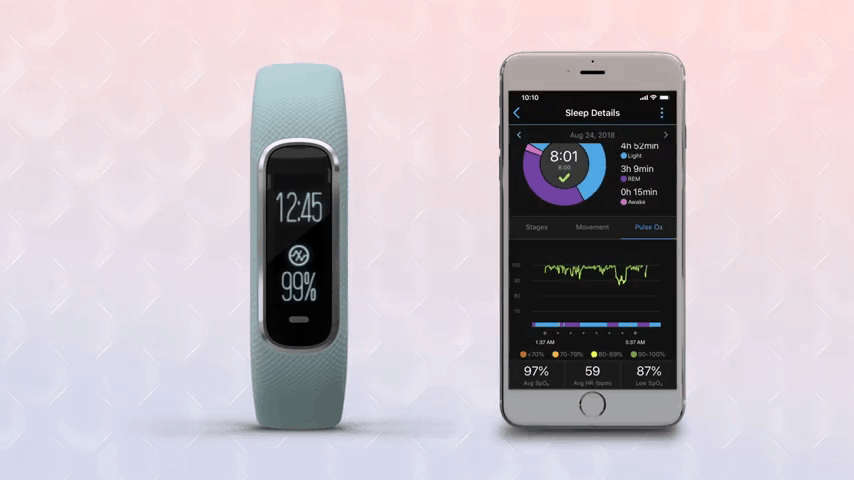
Pulse Oximetry is the technique to determine oxygen saturation (SO2). Pulse Oximeters are mainly used in clinics and Hospitals. Pulse Oximeter, as it sounds, is a combination of a pulse meter and an Oximeter.
When it comes to finding oxygen saturation, there are two types of methods that are mainly used.
- SPO2 – Peripheral Oxygen saturation (SPO2) – It is an indirect and non-invasive approach. In this method, we use the pulse Oximeter.
- SAO2 – Arterial Oxygen Saturation (SaO2) – It is a direct but invasive approach. In this method, the doctors use the blood test known as “Arterial blood gas study (ABG)” to know the oxygen saturation level in your blood.
Modern Smartwatches come with the SPO2 sensor which helps them determine the Oxygen saturation in your blood level.
Now, you must be wondering how the Pulse Oximeter works. According to the American Thoracic Society:

“A Pulse Oximeter comes either as a small unit with a built-in finger/toe clip or a small handheld device that has a probe that can attach or be applied to your finger, toe or earlobe… A beam of light from the device passes through the blood in your finger (earlobe or toe) to measure your oxygen”.
The smartwatches work the same way as the simple finger clip only that they send the beam of light from your wrist instead of your finger.
When it comes to Pulse Oximeters, they show blood saturation in the form of a percentage. However, it can also vary from vendor to vendor. For example, Fitbit shows the oxygen saturation level in the form of a graph which we’ll discuss later in the article.
Looking for a Smartwatch that can monitor blood pressure? check out my post on the Best 5 Android Smartwatches with ECG Monitoring that are FDA Approved.
Why Do We Need It and Who Uses It?
Pulse Oximeters (Oxygen Sensors) are used by doctors to determine the oxygen saturation level in the patient’s blood. Oxygen is very important for our body, you can consider it as a crucial gas and our body can’t function without it.
Our lungs play an important role as they allow us to inhale the oxygen which gets mixed into our blood and then passes on to our cells.
When a person gets any lung disease, the oxygen saturation levels get low and doctors use Pulse Oximetry to determine if the person has a lung issue or not.
Apart from lung disease, doctors also use this test for various medical conditions which can affect the blood oxygen levels such as asthma, pneumonia, lung cancer anemia, heart attack, and others.
The Optimal Blood Oxygen Level
In the medical world, the process of measuring oxygen saturation level using the pulse Oximeter is known as “O2 Sat” (SPO2). We will try to keep the terms as simple as possible and the following guidelines will help you determine your oxygen saturation level and whether you need to contact a doctor or not.
- If your reading is between 95 and 100% then it is completely normal.
- If your reading is below then 95%, it is considered low and you should get in touch with your doctor.
In the case of Coronavirus, Severe Pneumonia is the most significant symptom. According to the WHO interim Guidance document for Coronavirus, patients with severe pneumonia have oxygen saturation (SPO2) of less than 90% on room air.
How Accurate are The Finger Pulse Oximeters?
According to the American Thoracic Society
“The Oxygen level from a finger pulse Oximeter(the ones that are being used at medical facilities) is reasonably accurate. Most finger Oximeters give a reading 2% over or 2% under what your saturation would be if obtained by an arterial blood gas (ABG)”.
The same document also mentions that “The Oximeter reading may be less accurate if a person is wearing nail polish, artificial nails, has cold hands or poor circulation”.
These are the different factors that affect the accuracy of Finger Pulse Oximeters.
How Accurate are The Smartwatches Pulse Oximeter Sensors?

Smartwatches and wearable devices will play a huge role in the future of the medical industry, and we read about lots of cases in which Smartwatches helped to save lives.
When it comes to SPO2 Sensors in Smartwatches, meaning that they are reading the SPO2 from the wrist, their accuracy is not that great and it depends on many factors.
You see, Smartwatches measure your SPO2 from your wrist, therefore variants like skin tone, fat levels, blood vessels, proper wearing, and proper straps will affect the readings.
In addition, in opposite to the VO2 Max measurement which measures your blood oxygen in an effort, the SPO2 measurement must be taken while perfectly still and while resting. Any movement or effort before or during the test will affect it tremendously.
That being said, no, you cannot trust them with your life. If you have medical problems or you are not sure about your health, consult with a doctor. These gadgets are not a replacement for medical checks!
Measuring blood Oxygen: Finger vs wrist
These words by Fitbit’s director of research, Conor Heneghan will summon it up for you:
“It’s a pretty hard technical problem to measure SpO2 on the wrist, Unlike fingers, which have many blood vessels near the surface that offer a strong signal, the wrist is prone to obstructions and poor readings. You move a little bit, or even just you are a little bit colder than normal, you can get a very weak signal,” Heneghan said. “We’ve gone after long-term averaging, so that way, when we take overnight measurements, we can comfortably exclude the periods when we feel that signal is too noisy or weak to be reliable.”
This is the reason why the Fitbit, in opposition to the Apple Watch 6 that performs spot checks while you sleep, will only measure your SPO2 levels while sleeping and will give you an overnight review.
Are Pulse Oximeters on Finger and on Smartwatches FDA Approved?
While many of the finger pulse Oximeters brands are FDA approved(Medline for example), none of the Smartwatches are FDA approved.
So, If I cannot really Trust their Accuracy, Should I Buy A Smartwatch With An Oxygen Sensor?
Well, that depends on your expectations. If you are looking for a trustful Pulse Oximeter for purely medical reasons then you can buy a 50$ Finger Oximeter from Medline which is FDA approved.
If you want a Smartwatch for the tons of features and the fun that it brings and SPO2 readings that are quite accurate(especially as an overnight measurement device) then sure, go for it, Smartwatches are great.
In addition to that, many users are reporting accurate SPO2 readings from the watches(even the spot-on checks) and it could be that it will work fine for you(providing that you wear it tight enough).
Here is a related post that I have written that might interest you about the Best 5 Wearable Blood Sugar/Glucose Monitor Devices.
Can Garmin measure Blood Oxygen And How accurate is It?
Garmin is one of the most popular companies out there and the company has introduced its Oxygen Sensor “Pulse Ox” in their Smartwatches and fitness bands.
The main purpose of this sensor in Garmin watches is to detect “Sleep Apnea” which is a sleep disorder and 8 out of 10 people who suffer from this problem don’t know about it.

The Garmin Pulse Ox sensor monitors the blood oxygen level and then you can use the data to know if you have this problem or not.
Garmin’s watches, like the Apple Watch, allow you to perform a spot on check-in which you will require to stay still for 30 seconds. It also performs overnight tracking.
When it comes to accuracy, the official FAQ section does mention that:
“… [Accuracy] can be influenced by Altitude, activity, and an individual’s health”. The section also states that if your Pulse ox during sleep reading seems slow then it could be due to incorrect posture. The website recommends to main a position that is “conducive to good circulation and at or around heart level”.
Can Fitbit Measure Blood Oxygen and How Accurate Is It?
Some Smartwatches and fitness bands by Fitbit(mentioned in the list below) also come with the SPO2 sensor which is mainly focused on the Sleep Apnea problem. Instead of showing the percentage, Fitbit shows the “Estimated” Oxygen variation in the form of a graph.
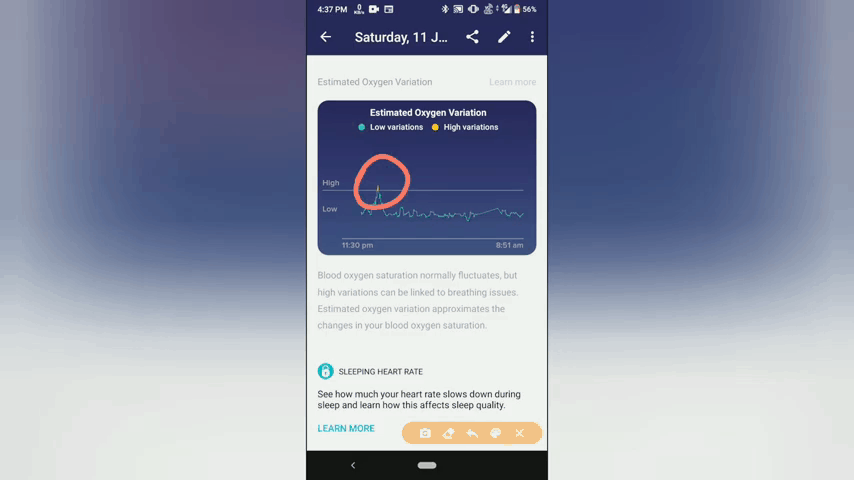
The graph highlights the big variation in the graph that could be a potential sign of an issue. However, it is not an actual SPO2 Estimate.
According to Dr. Conor Henenghan, Fitbit’s Lead Sleep Research Scientist, “We are not claiming this [graph] can be used to correlate with sleep apnea status… This graph is another opportunity for us to provide more data to our users”.
He also said, “Seeing frequent big variations is a clue that you may be experiencing breathing during sleep – something you might want to talk to your doctor about”.
How accurate is Withings’ Pulse Oximeter?
Withings also has recently launched the “ScanWatch” which is also focused on Sleep Apnea. It comes with the SPO2 sensor which can monitor the blood oxygen level and provide alerts of any potential problems. It is currently waiting for clearance by the FDA.
Can the Apple Watch measure Blood Oxygen?
While older versions of The Apple Watch can measure blood oxygen levels, the 9th and the new 10th versions no longer have this capability. Please consider this before making a purchase.
Allow me to elaborate on this topic.
Basically, Yes, the Apple Watch Series 9,10 can measure blood oxygen levels using the built-in Blood Oxygen app. However, there are some important caveats:
- For Apple Watch units sold in the United States on or after January 18, 2024, the blood oxygen monitoring feature has been disabled due to a patent dispute with medical tech company Masimo. These units have part numbers ending in “LW/A”.
- Outside of the US, the Blood Oxygen app continues to function normally on the Apple Watch Series 9 and allows users to measure their blood oxygen saturation (SpO2) levels.
- The Blood Oxygen app provides on-demand measurements as well as periodic background readings when the user is inactive. It uses a bright red light on the watch’s sensor to estimate SpO2 levels.
- To take a measurement, users need to keep their arm still with the watch facing up for around 15 seconds. The results are then displayed on the watch.
- All blood oxygen data is synced to the Health app on the user’s iPhone for tracking over time.
So in summary, while the Apple Watch Series 9,10 is technically capable of blood oxygen monitoring, the feature has been disabled for new units sold in the US due to legal issues, but continues working as intended in other countries.
For previous Apple watch versions, you can find in the App Store a dedicated “Pulse Oximeter” app that uses the camera to detect pulse and Oxygen levels from your fingertip.
However, the app mentions that “The Pulse Oximeter app is not intended for Medical Use” and is “only designed for general fitness and wellness purposes.” This option is very inaccurate and I would not recommend using it.
Is there a Xiaomi watch with Oximeter?
Xiaomi offers tons of great smartwatches, but only very few of them come with a built-in Oximeter (SPO2 Sensor). The first Xiaomi watch that comes with Oximeter is the Xiaomi Mi Watch. The premium smartwatch by the company offers a full-fledged and functional SPO2 Sensor that you can use to keep track of your blood oxygen levels.
If you want something affordable from Xiaomi and still want the Oximeter, you can consider Mi band 6 and 7 which also come with a built-in SPO2 Sensor.
Frequently Asked Questions [ FAQs ]
What New Smartwatches Are Coming Out in 2026?
In 2024, you’ll see the Apple Watch Ultra 2, Apple Watch SE 2, Samsung Galaxy Watch 7 series, Google Pixel Watch 2, and OnePlus Watch 2. These new smartwatches promise advanced health metrics and improved performance.
What Smartwatch Do Cardiologists Recommend?
Cardiologists recommend the Apple Watch Series 9 and Samsung Galaxy Watch 6 Classic. Both offer accurate Health and ECG monitoring, helping you track your health and detect issues like respiratory problems and sleep apnea effectively.
What Is the Best Smartwatch for Health Monitoring?
For the best health monitoring, you should consider the Apple Watch Ultra 2. It offers advanced features like sleep tracking, ECG, and blood oxygen monitoring, making it a top choice for thorough health insights.
Question: Can A Smartwatch Actually Measure Oxygen Levels?
Answer: Almost all major smartwatches have a particular SpO2 sensor to measure blood oxygen. You can even take readings during intense workloads or workouts.
Question: How Accurate Is The Oxygen Sensor In Smartwatches?
Answer: The practical measurement accuracy is ±2% within 80% to 100% SpO2. However, the accuracy reduces to ±3% when the SpO2 remains within 50% – 80%.
Question: Can I Use A Smartwatch Instead Of An Oximeter For Oxygen Levels?
Answer: You should stick with an oximeter to use the reading for treatment purposes. Oximeter readings are more accurate compared to the sensory smartwatch.
Question: Why Do I Need To Measure The Oxygen Level?
Answer: Fitness-centered smartwatches offer various premium health metrics. And the suggested calculations require your approximate blood oxygen level.
Bottom Line
That’s all folks. These are some of the best Smartwatches with an oxygen sensor. You can use these watches to get an idea about your blood oxygen level. However, these watches can’t be a substitute for professional medical equipment. If you feel that you are not feeling well then make sure to contact the health helpline and get medical help.
If you have any questions, please let us know in the comment section below. Also, check out my post on the best Smartwatches with VO2 Max.

As a professional trainer and a gadget lover, I’ve spent a lot of money and time buying wearable activity trackers, smartwatches, and gadgets, and checking them out. My site is focused on helping you with your activity tracking and smart technology journey. I try to provide the most helpful updated content on this subject. Hopefully, you will love my blogs and be a regular around here.